Tarangire’s history is deeply intertwined with the cycles of drought and the movement of wildlife. The area was originally a traditional dry-season grazing ground for the massive herds of the Maasai Steppe. Recognizing its critical importance as a water source and its rich biodiversity, the region was first gazetted as a Game Reserve in 1957.
To provide stronger, permanent protection for this vital ecosystem, it was established as Tanzania’s sixth national park in 1970. The park is named after the Tarangire River, which flows permanently through its center, acting as a magnet for wildlife, especially during the dry season.
Spanning approximately 2,850 square kilometers (1,100 square miles), Tarangire forms the center of a much larger migratory ecosystem. During the dry season (June to October), the park becomes a sanctuary for wildlife from the surrounding areas, leading to a concentration of animals that rivals the Serengeti.
A safari in Tarangire is a unique blend of spectacular wildlife and otherworldly landscapes.
The Elephant Spectacle
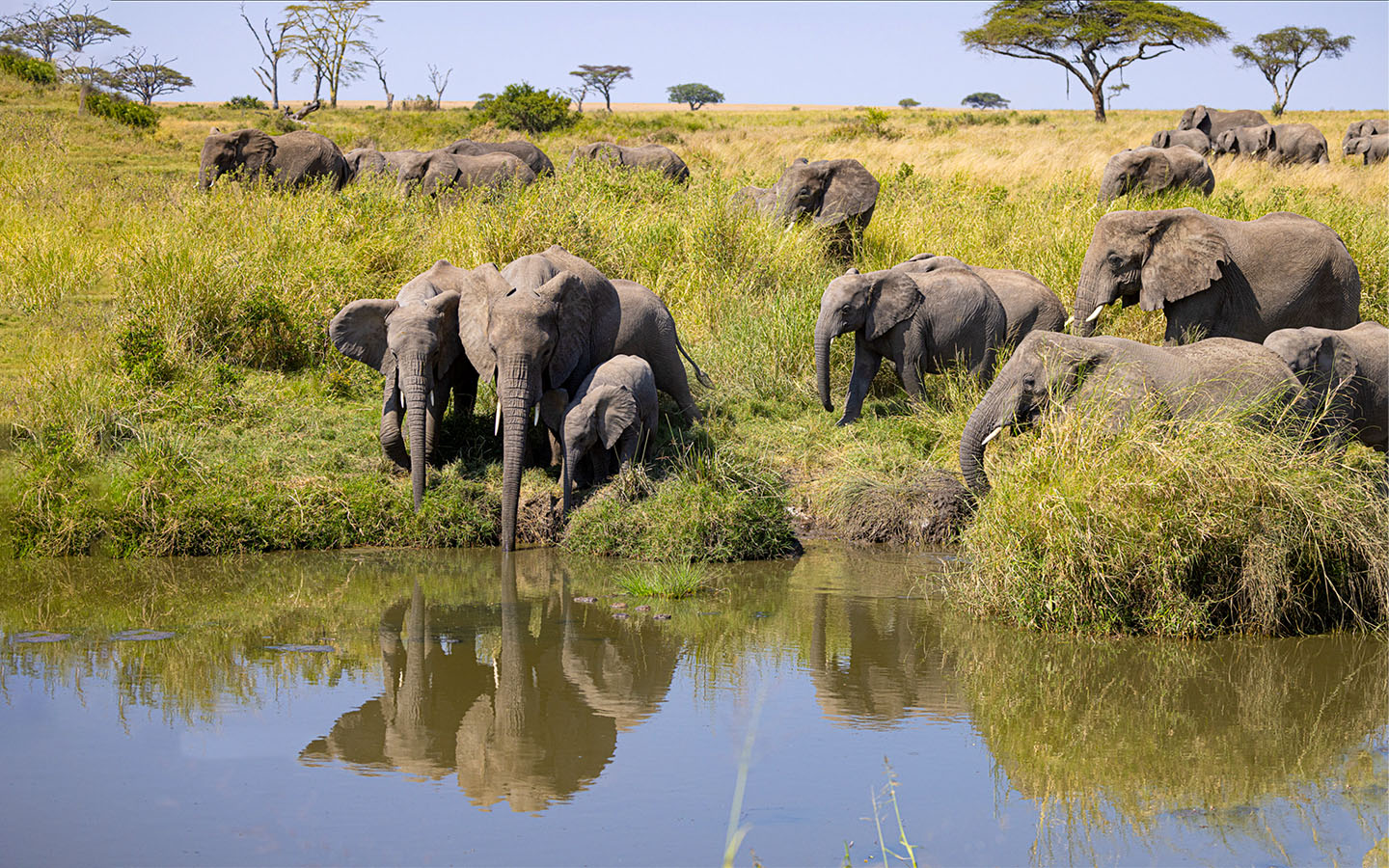
Tarangire is famous for having one of the largest elephant populations in East Africa. It’s not uncommon to see herds of over 100 individuals, from tiny calves to immense, old tuskers. Watching these families interact, bathe in the river, and march majestically between the baobabs is a quintessential Tarangire experience.
The Great Dry Season Migration
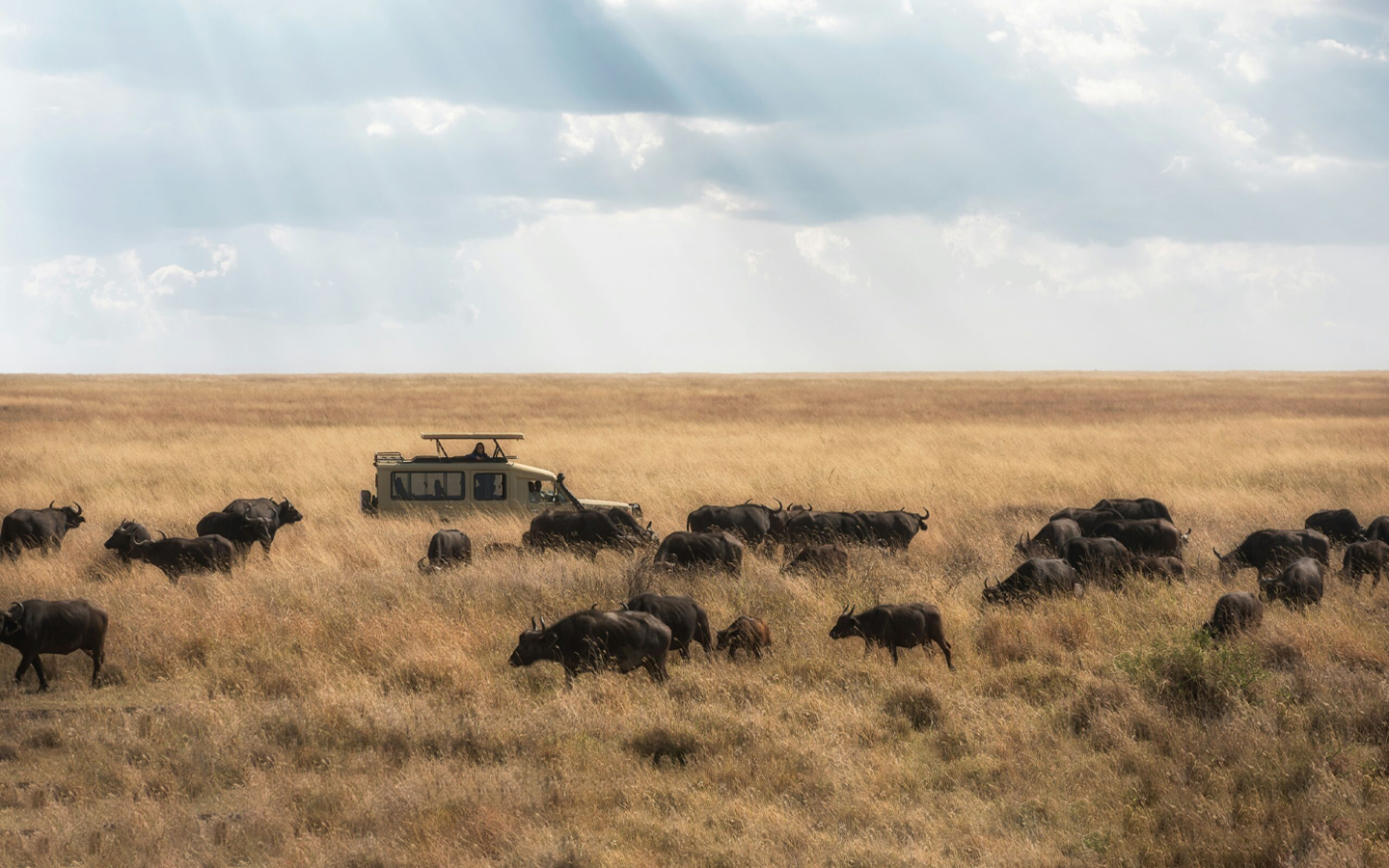
From June to October, Tarangire hosts its own “mini-migration.” Tens of thousands of wildebeest, zebra, buffalo, and eland congregate along the Tarangire River, followed by their predators. The density of wildlife during this period is astounding.
Iconic Landmarks and Wildlife
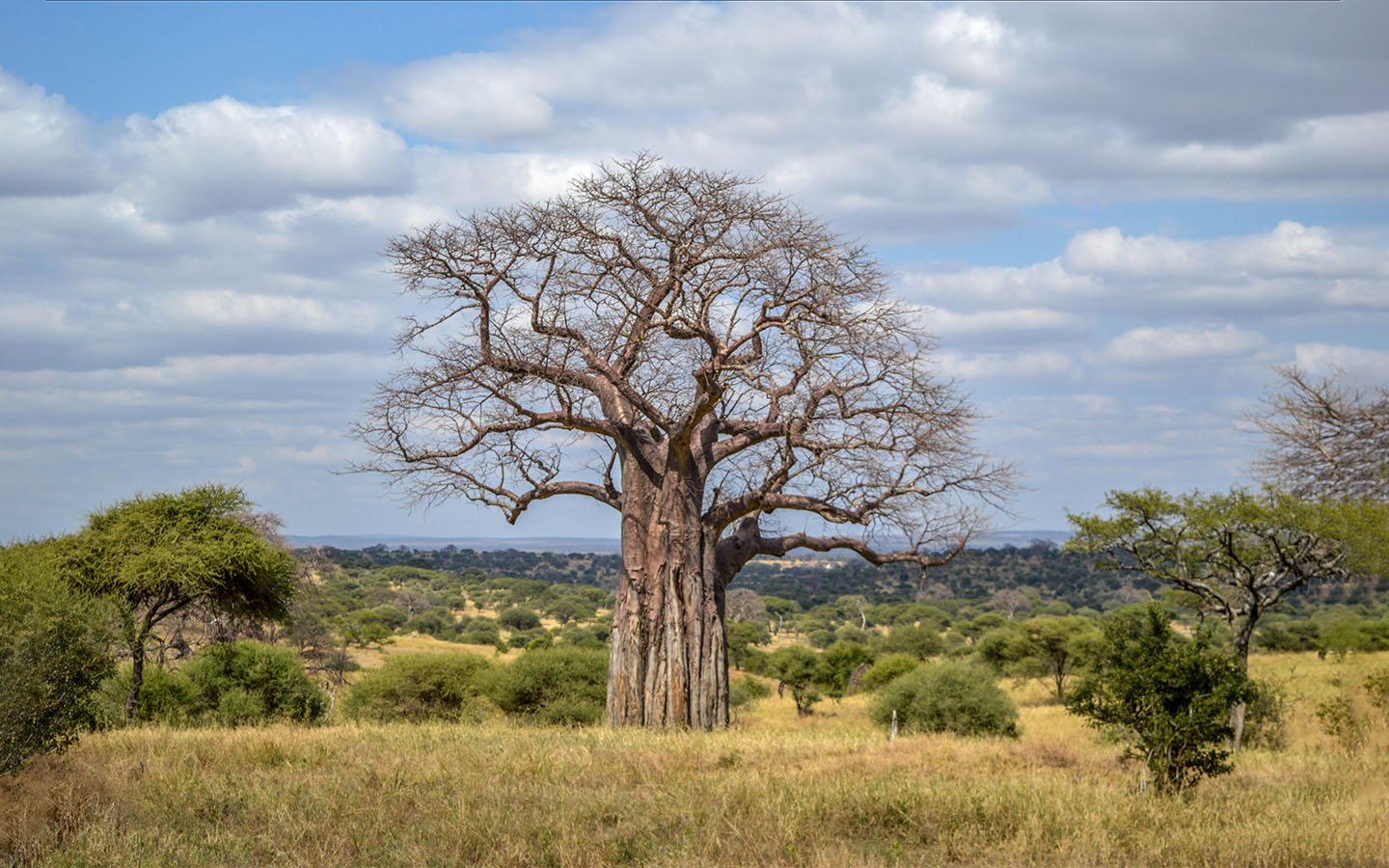
Ancient Baobab Trees: The park’s iconic “upside-down” trees dot the landscape, creating a surreal and photogenic backdrop. Some of these majestic trees are over a thousand years old.
The Tarangire River: The park’s lifeline. Game drives along the river offer constant wildlife action as animals come to drink.
Swamp Areas (Silale & Gursi): These permanent marshes are hidden oases, attracting year-round waterbirds, elephants, and predators like lions and leopards that lie in wait.
Birdwatcher’s Paradise: Home to over 550 bird species, the highest concentration in Tanzania. Look for the endemic yellow-collared lovebird, the massive kori bustard, and spectacular flocks of colorful starlings.
Key Activities:
Classic Game Drives: Explore the diverse habitats, from riverine forests to open savannah and swampy marshes.
Walking Safaris: Experience the bush on foot with an armed guide. Feel the ancient presence of the baobabs and discover the smaller details of the ecosystem.
Night Game Drives (in designated areas/outside the park): Discover the park’s nocturnal life, including genets, civets, bushbabies, and hunting predators.